A Cape Town food guide with opinions: the restaurants worth booking weeks out, the markets locals actually shop, the coffee bars that made this a flat-white city, and what to eat in each.
Every city has restaurants. Cape Town has a story it tells with food — Cape Malay spice from the Bo-Kaap, braai smoke from the townships, Huguenot vines from the valleys, and Atlantic fish landed that morning in Kalk Bay. Eat here without knowing that, and you have simply had dinner.
This is not a list of everything. It is a list of the tables and counters that keep coming up when Capetonians talk to each other, arranged by the kind of evening you actually want.
The restaurants worth planning your week around
At the top end, Cape Town punches far above its price. The Test Kitchen's successors, La Colombe in Constantia and its siblings, and the Winelands fine-dining rooms deliver tasting menus at a fraction of London or New York pricing — and they book out four to eight weeks ahead in high season. If a specific room matters to you, reserve before you book flights.
For a defining Cape Town meal without the tasting-menu commitment, three directions rarely disappoint. Cape Malay cooking in the Bo-Kaap: bobotie, denningvleis, koesisters on a Sunday. Seafood on the water in Kalk Bay or Hout Bay, where line fish arrives with nothing done to it that needed doing. And modern South African cooking around Bree Street and the East City, where the wine list is entirely local and the chef will tell you which farm the lamb came from.
Book dinner for 19:00 or later; Capetonians eat late. And ask for a courtyard or a view — this is a city where where you sit is half the meal.
Insider tips
- — Reserve fine dining four to eight weeks out for December–February.
- — Corkage is common and modest — bring a bottle you bought in Stellenbosch.
"The best meal in Cape Town is rarely the most expensive one. It's the one that could not have happened anywhere else."
Markets: where the city eats on weekends
The Old Biscuit Mill's Neighbourgoods Market in Woodstock is the famous one — Saturday mornings, arrive by 09:30 or queue. Oranjezicht City Farm Market at Granger Bay is the one locals prefer: Saturday and Sunday, ocean air, small producers, real vegetables and a coffee queue that moves.
Bay Harbour in Hout Bay runs Friday evening through Sunday with live music and a working-harbour setting. V&A Food Market is the reliable rainy-day option. In Stellenbosch, the Root44 and Slow Market weekends turn a Winelands day into a long, slow lunch.
Markets are also the cheapest good eating in the city: R80 to R150 buys a genuinely excellent plate. Bring cash for the small stalls even where cards work.
Insider tips
- — Go early — by 11:30 the good stalls have queues and the parking has gone.
- — Ask a stallholder what they'd eat here; you'll be sent two stalls left, and be right.
Coffee: the flat-white city nobody warned you about
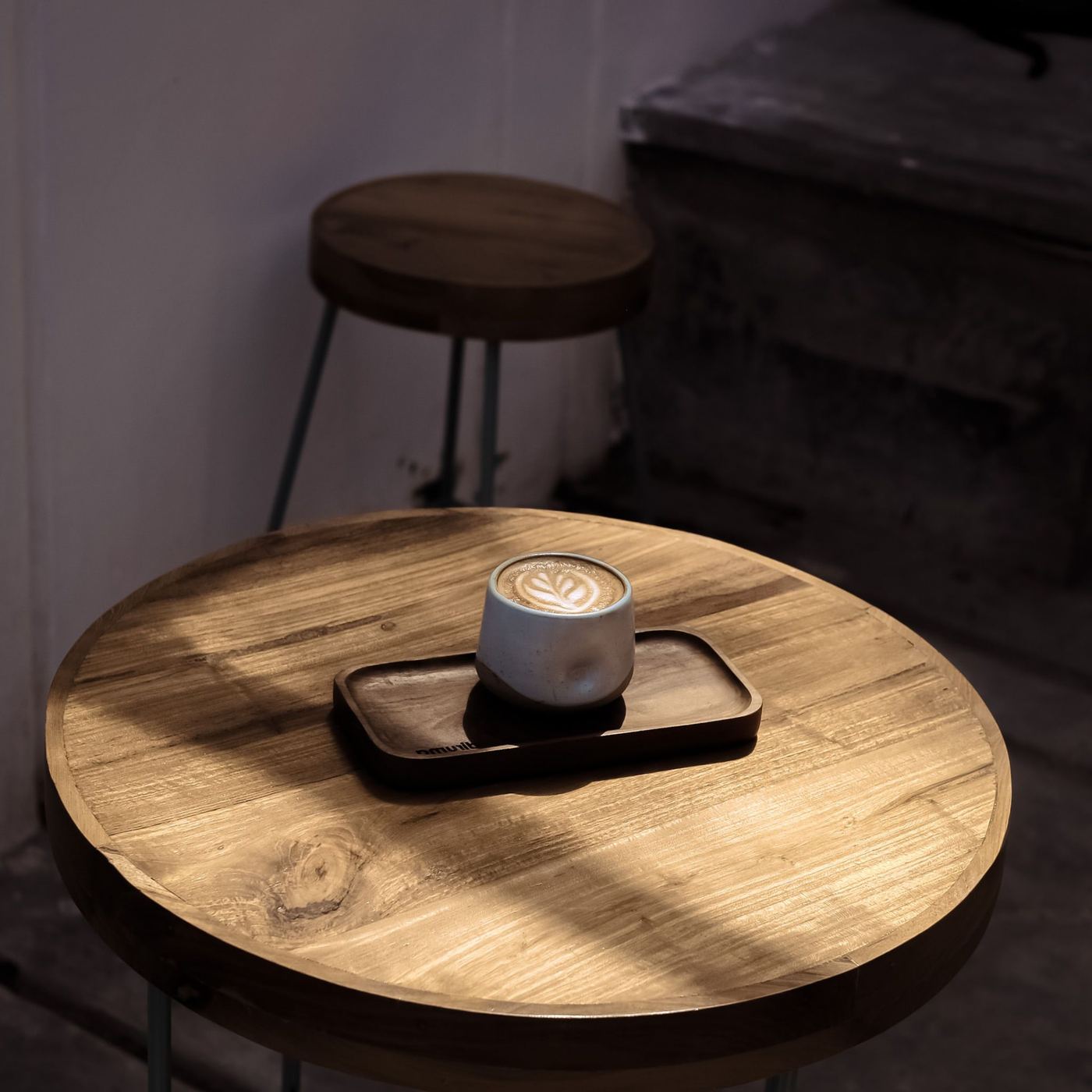
Cape Town takes coffee seriously in a way that surprises first-time visitors. The Bree Street and Loop Street corridor is dense with roasters pulling single-origin espresso; Woodstock's converted warehouses hide the roasteries themselves; Sea Point and Kalk Bay do the same thing with a sea view attached.
The local order is a flat white or a cortado, R35 to R55, taken at a counter rather than carried away. Most specialty spots open at 07:00 and close by 15:00 or 16:00 — this is a morning culture, not a late-night one. If you only have one, make it a roastery where the person pulling the shot roasted the beans.
Insider tips
- — Best coffee windows: 07:00–09:00 before the queues, or 14:00 before closing.
- — Rusks with your coffee is the most South African order on the board.
The food that only makes sense here
Braai is not barbecue and saying so out loud will earn you friends. Wood fire, boerewors in a coil, lamb chops, pap and chakalaka, and a pace measured in hours. A township braai tour or a Sunday shisanyama is the most honest meal in the city.
Then the shortlist: bunny chow, curry in a hollowed loaf; gatsby, a metre-long sandwich built to be shared four ways after midnight; biltong and droëwors from any butcher; koeksisters, sticky and syrup-soaked; malva pudding with hot custard; snoek braaied with apricot jam. And Cape Town's oysters and West Coast mussels, which cost what starters cost elsewhere.
Pair all of it locally: Chenin Blanc with seafood, Pinotage with braai, Constantia's Sauvignon Blanc with anything eaten outdoors before sunset.
Eating in the Winelands without wasting the day
Stellenbosch and Franschhoek turn lunch into the main event. Estate restaurants pair courses with their own vintages for R400 to R900 — extraordinary value by international standards, and worth the whole afternoon. Two estates and one long lunch beats five rushed tastings, every time.
Book the lunch first and build the tastings around it, and let someone else drive. Our Winelands days exist for exactly this reason: the estates that pour the good stuff are rarely the ones nearest the parking.
Insider tips
- — Book estate lunches ahead; the good tables go a week or more out.
- — Two estates a day is a real day. Five is a blur with a headache.
Practical: tipping, timing, budgeting and dietary needs
Tip 10 to 15 percent; service is almost never included. Expect R120 to R220 for a casual main, R300 to R500 at a smart restaurant, R900 to R2,000 for a tasting menu with pairings. Cards are accepted almost everywhere, cash helps at markets and township spots.
Vegetarian and vegan cooking is strong in the City Bowl and Woodstock; halaal food is widespread thanks to the Cape Malay community, and gluten-free is well understood in the specialty scene. Say it when you book and it will simply be handled.

Key takeaways
- 01Book fine dining four to eight weeks ahead in summer; corkage is cheap.
- 02Oranjezicht market is the locals' pick; Neighbourgoods is the famous one.
- 03Coffee culture peaks 07:00–15:00 — order a flat white at the counter.
- 04Braai, bunny chow, gatsby, snoek and malva pudding are the non-negotiables.
- 05One long Winelands lunch beats five rushed tastings — and get a driver.
Plan your trip — keep reading
- Stellenbosch destination guideThe estates, the lunches and how to pace a Winelands day.
- Braai culture, explainedWhy the fire matters more than the meat.
- Cape Town on a budgetWhat meals actually cost, market to tasting menu.
- Where to stay in Cape TownBase yourself walking distance from the good tables.
- Food and wine experiencesGuided tastings, market walks and township braai afternoons.
Written by
Tendai Gumunyu
On-the-ground contributor for the SA Travelcations journal — writing from Cape Town, the Winelands and the Garden Route.